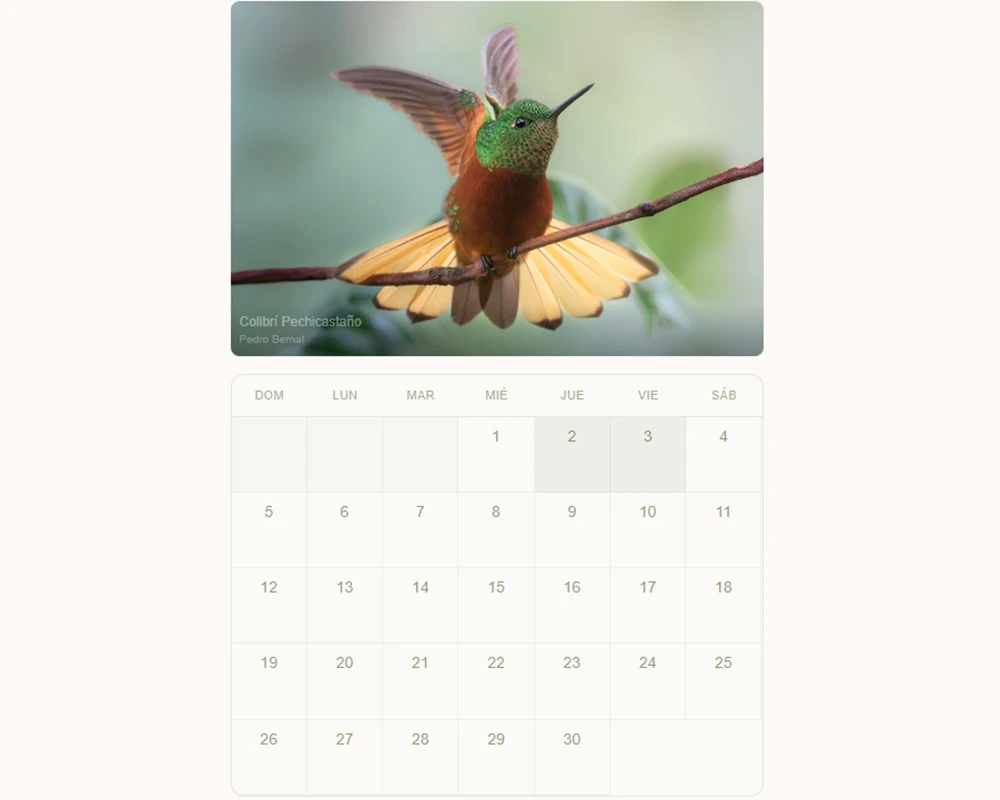
Living Updates
The calendar evolves throughout the year. New dates appear as events emerge. Regional moments join global ones. It grows with the seasons.
Another Turn Around the Sun
A living calendar for those who pay attention to the natural world.
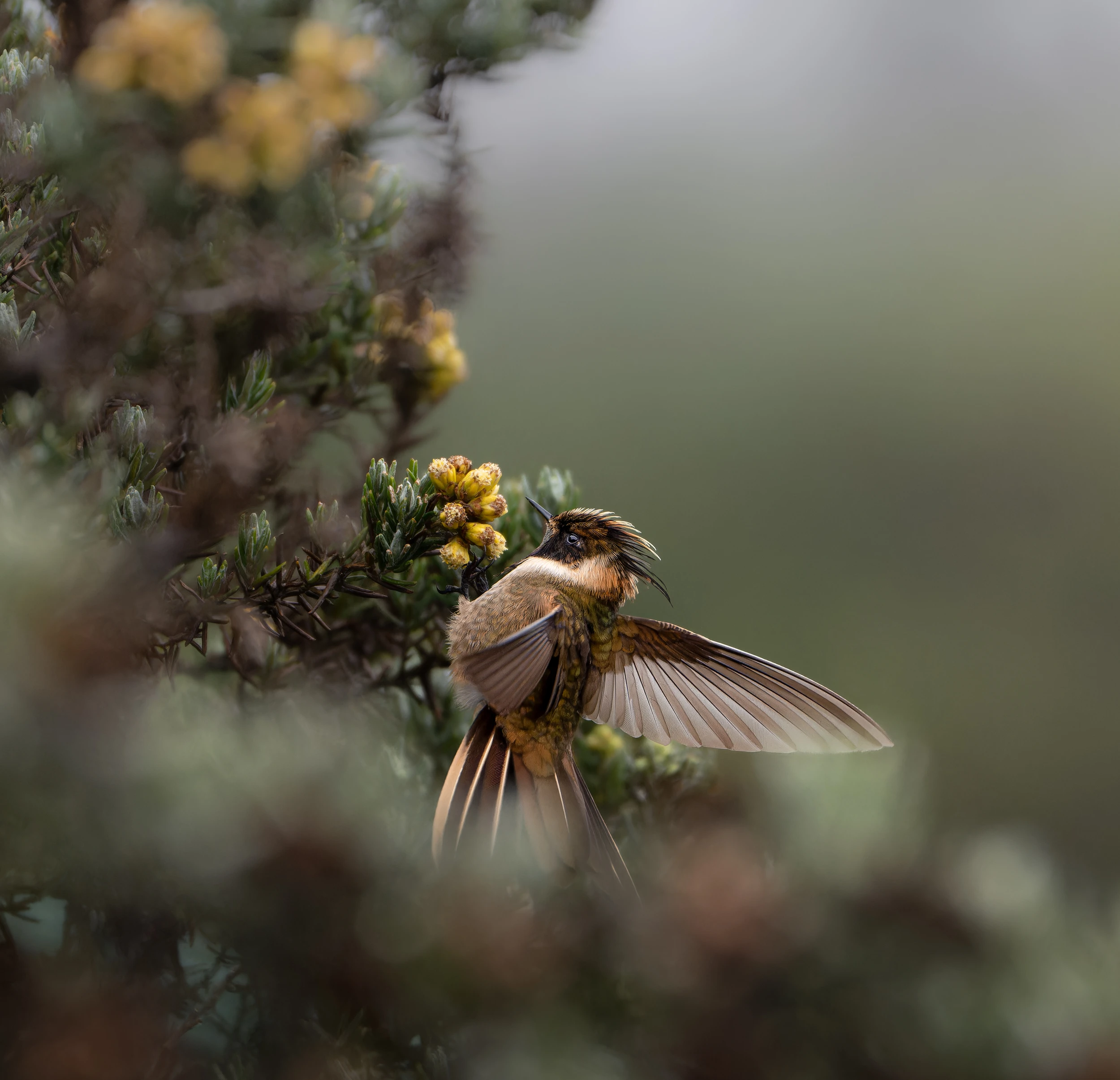
Each year carries its own rhythm. Days marked for wetlands, forests, migratory birds, and biodiversity. Moments to pause, observe, and reconnect.
The environmental calendar is an invitation. A gentle structure for noticing what moves, blooms, and migrates around us.
Forty-six dates for nature, conservation and sustainability — every one of them worth marking.
Dates marked Colombia are national observances. The rest are international, wherever you are.
January holds only two dates, and both fall on the 26th. In Colombia the dry season is at its clearest — the Andes open up, the light turns hard and honest, and shorebirds work the coasts. A thin month on the calendar is a full month in the field.
Wetlands first, on the 2nd. Then two dates that move with the week rather than the number: World Pangolin Day on Saturday the 20th, World Whale Day on Sunday the 21st. Humpbacks are still far south this time of year, but the pangolin — the most trafficked mammal on earth — gets one day and needs many more.
The densest month of the first half: five dates, and the three that close it — forests on the 21st, water on the 22nd, frogs on the 20th — belong together. The rains return to much of Colombia and the amphibians answer immediately. If you only record sound one month of the year, make it this one.
Earth Day on the 22nd, and Colombia's own Día Nacional del Árbol on the 29th. Two dates, both about standing still long enough to notice what is rooted. The cloud forests are at their wettest and greenest, which makes them difficult to photograph and worth photographing anyway.
The year's peak for anyone who watches birds. Global Big Day and World Migratory Bird Day both land on Saturday, May 8 — one Saturday, two reasons to be out before dawn. Bees on the 20th, biological diversity on the 22nd, turtles on the 23rd. Clear your calendar for the second weekend.
Six dates, and the broadest range of any month: the Colombian campesino on the 4th, the environment itself on the 5th, oceans on the 8th, desertification on the 17th, wildlife trafficking on the 25th. Nature Photography Day sits in the middle, on the 15th — a good day to go out with one lens and no plan.
July belongs to the Andean condor, on the 7th. Colombia's national bird, and a species you count in individuals rather than thousands. Snakes on the 16th, whales and dolphins on the 23rd, mangroves on the 26th, and Nature Photographer Day on the 29th — for the people who spend years waiting for one frame.
Four dates, all of them for single species under pressure: lions on the 10th, elephants on the 12th, lizards on the 14th, orangutans on the 19th. None of them live in Colombia. August is the month the calendar looks outward, and a quiet stretch at home to work on technique rather than targets.
Colombia marks its own biodiversity on the 11th — more species per square kilometre than any other country, and more bird species than any other, full stop. World Rivers Day closes the month on Sunday the 26th. Two dates, and a reminder that the water is what arranged all of it.
The second great month for observers. October Big Day and World Migratory Bird Day both fall on Saturday the 9th, with World Animal Day and Colombia's Día Nacional de las Aves sharing the 4th. Migration is running south through the Andes. Five dates, and the best odds of the year for a species you have never recorded.
November is the month Colombia names what it protects: the national parks on the 9th, the orchid — the national flower — on the 22nd. The jaguar closes the month on the 29th, a species that still moves through the corridors those parks exist to hold open. The 6th marks what war does to an environment, which belongs here too.
The year ends with two dates and no ceremony: soil on the 5th, mountains on the 11th. The ground underneath and the altitude above — the two things that decide what grows where in a country shaped by three cordilleras. A month for going back through the year's images and seeing what you actually paid attention to.
The year before Environmental Calendar 2026
Built for those who observe, photograph, and care for the natural world.
The calendar evolves throughout the year. New dates appear as events emerge. Regional moments join global ones. It grows with the seasons.
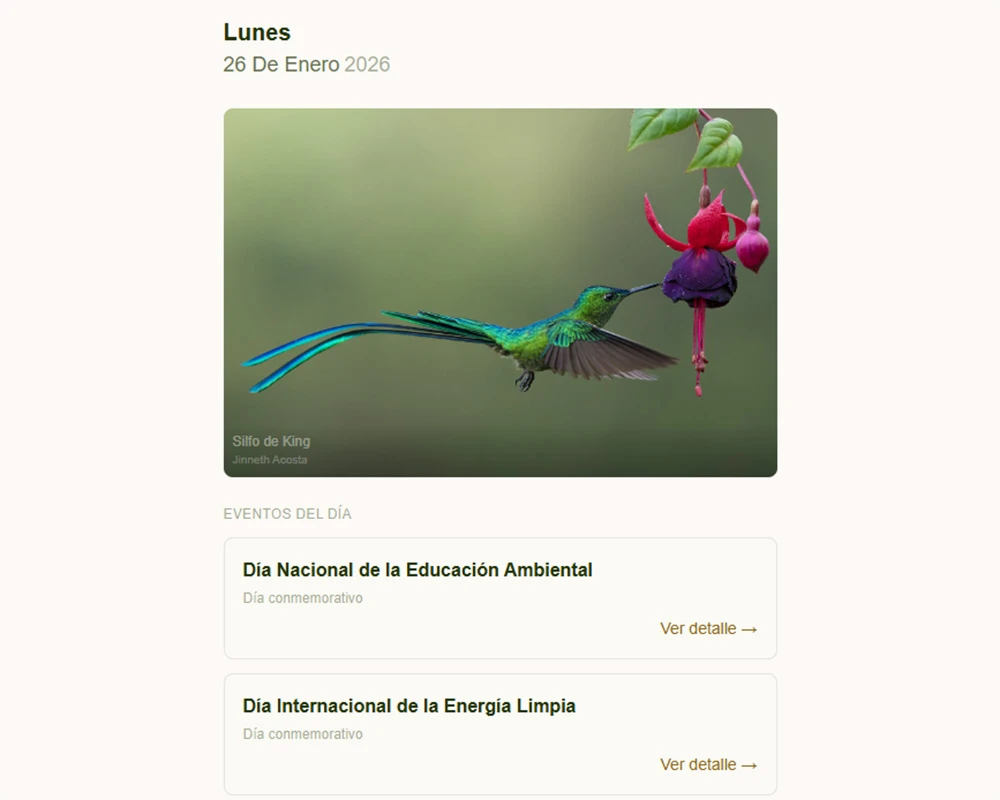
Each date is chosen with intention. Days for wetlands, forests, migratory birds, and biodiversity. A selection that matters to observers and conservationists.
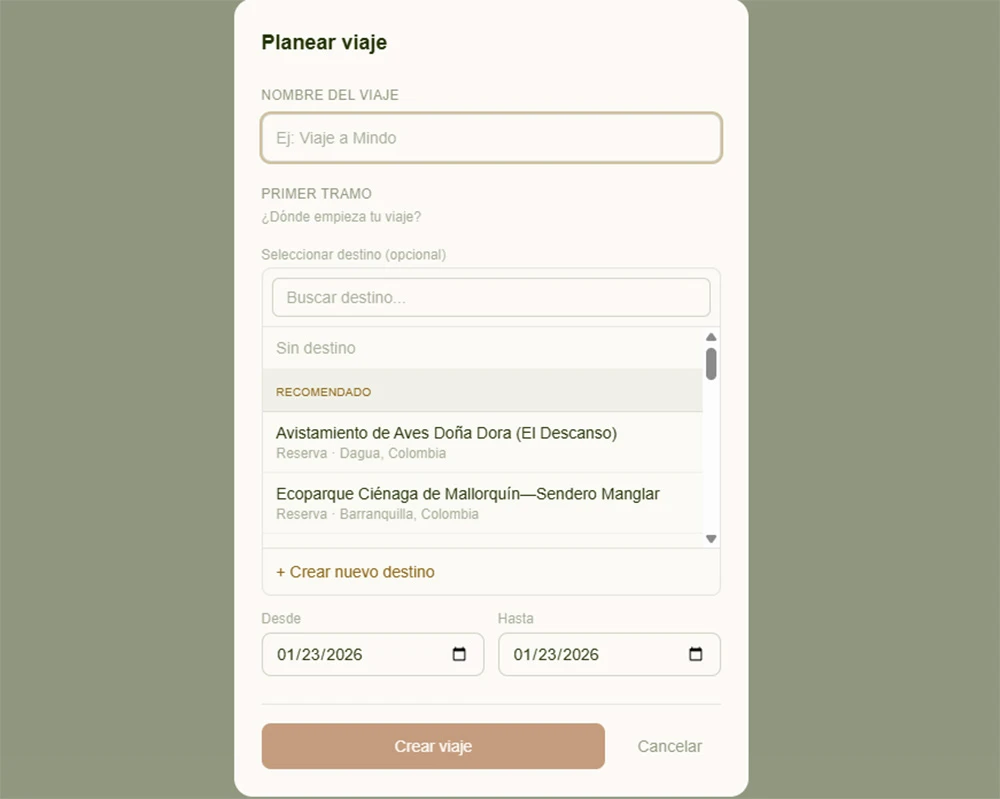
Open on any device. Check what's coming. Plan your observations. The calendar waits for you at calendar.motmotnature.com.
The environmental calendar is more than a list of dates. It is a living tool, updated throughout the year with relevant moments for observers, photographers, and those connected to nature.
Available year-round at calendar.motmotnature.com — on any device, no account required.
Time moves in cycles. The calendar is simply a way of marking what the natural world already knows: that each season brings its own gifts.
Use it as a companion. Let it remind you when to look up, when to listen, when to step outside.
Use the environmental calendar